

 877-CALL-MAA

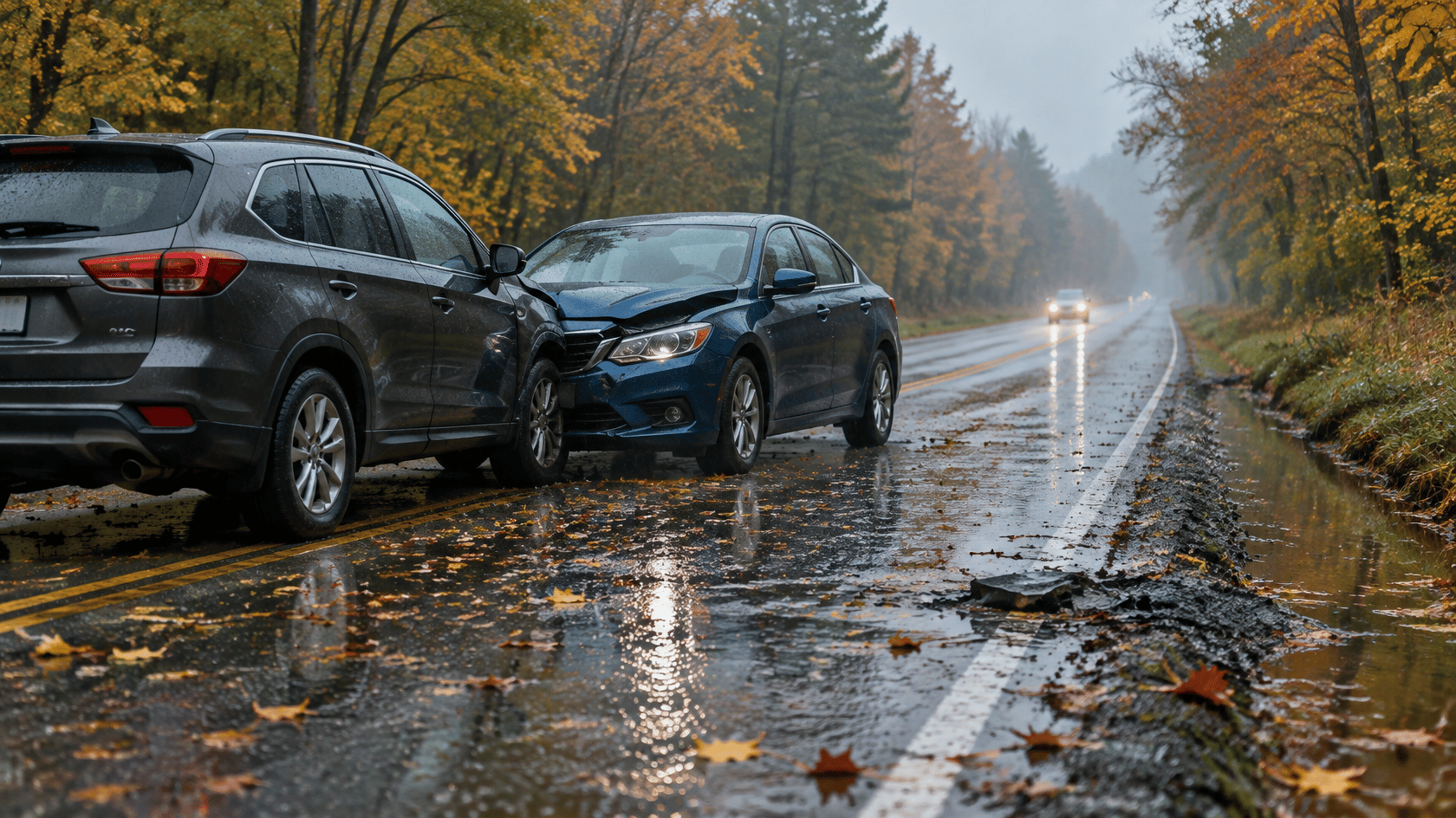
Michigan roads can become especially hazardous in the fall. Wet leaves can make pavement slick, heavy rain can reduce visibility, and standing water, mud, debris, or damaged pavement can make it harder for drivers to maintain control.
But poor road conditions do not necessarily excuse a driver who causes a crash.
Drivers are expected to adjust to the conditions around them. That may mean slowing down, increasing following distance, allowing more room to stop, and using greater caution when visibility or traction is reduced.
If a driver fails to do that and causes a collision, the weather or roadway condition may explain why the crash happened, but it does not automatically eliminate the driver’s responsibility.
How Road Conditions Affect Fault
Wet leaves, standing water, potholes, poor drainage, debris, construction areas, and other roadway hazards can all contribute to an accident. The key question is usually how the drivers involved responded to those conditions.
For example, a driver who enters a leaf-covered curve too quickly and slides into another vehicle may still be responsible for failing to reduce speed. The same may be true of a driver who follows too closely on wet pavement or makes an unsafe maneuver when visibility is poor.
In some crashes, more than one driver may have contributed. One driver may have been traveling too fast for the conditions while another made an unsafe lane change. Michigan’s comparative-fault rules can affect the damages available when multiple people share responsibility.
That is why liability is rarely determined simply by identifying who lost control first. The actions of everyone involved, along with the conditions they were facing, must be considered together.
What If the Road Itself Was Dangerous?
Some crashes raise a different question: whether the roadway itself was defective or poorly maintained.
Claims involving potholes, damaged pavement, drainage problems, or other defects may involve the government agency responsible for maintaining the road. Those cases can be difficult because governmental agencies are generally protected by immunity, with limited exceptions under Michigan law.
A temporary condition such as rain or wet leaves is not necessarily the same as a legally actionable roadway defect. Claims involving public roads may depend on the type of defect, which agency had jurisdiction, whether the condition fell within an exception to governmental immunity, and whether the agency had legally sufficient notice.
Because these rules are highly fact-specific, a crash involving an allegedly dangerous public roadway should be evaluated carefully rather than assuming the government is responsible simply because the road contributed to the accident.
Evidence Can Disappear Quickly
When weather or road conditions are important to a crash, early documentation can make a significant difference.
If it is safe to do so, photographs or video should capture the roadway, wet leaves, standing water, debris, potholes, vehicle positions, and the surrounding area. Witness information, police reports, dashcam footage, surveillance video, and photographs of vehicle damage may also help establish what happened.
This evidence can be especially important because road conditions can change within hours. Water drains, leaves are cleared, weather improves, and road crews may repair or remove a hazard.
Insurance Coverage After the Crash
Michigan No-Fault benefits may still be available even when weather or road conditions contributed to the accident.
Depending on the applicable policy, Personal Injury Protection, or PIP, may provide benefits for certain accident-related losses, including eligible medical expenses, wage loss, and replacement services.
Those benefits are separate from any claim against another driver who may have negligently caused or contributed to the collision.
Damage to the vehicle is handled differently. Depending on the circumstances and the coverage purchased, collision coverage may apply to damage resulting from the crash.
What to Do After a Crash on a Dangerous Road
Your immediate priority should be your safety and medical needs. Seek medical attention when necessary and report the accident to law enforcement when appropriate.
If conditions played a role in the crash, document them as soon as you safely can. Take photographs, gather witness information, preserve any available video footage, and keep records relating to your medical care, vehicle damage, and insurance claim.
Most importantly, do not assume that bad weather or a dangerous roadway answers the question of fault. A careful review of the drivers’ actions, the road conditions, and the available evidence is often necessary to understand who may be legally responsible.
Michigan Accident Attorneys can investigate how the crash occurred, preserve evidence of the roadway conditions, evaluate the conduct of the drivers involved, and help you understand the insurance benefits and legal claims that may be available.
If you were injured in a Michigan car accident involving wet leaves, poor weather, or dangerous road conditions, call (877) 225-5622 or contact Michigan Accident Attorneys online for a free consultation.